
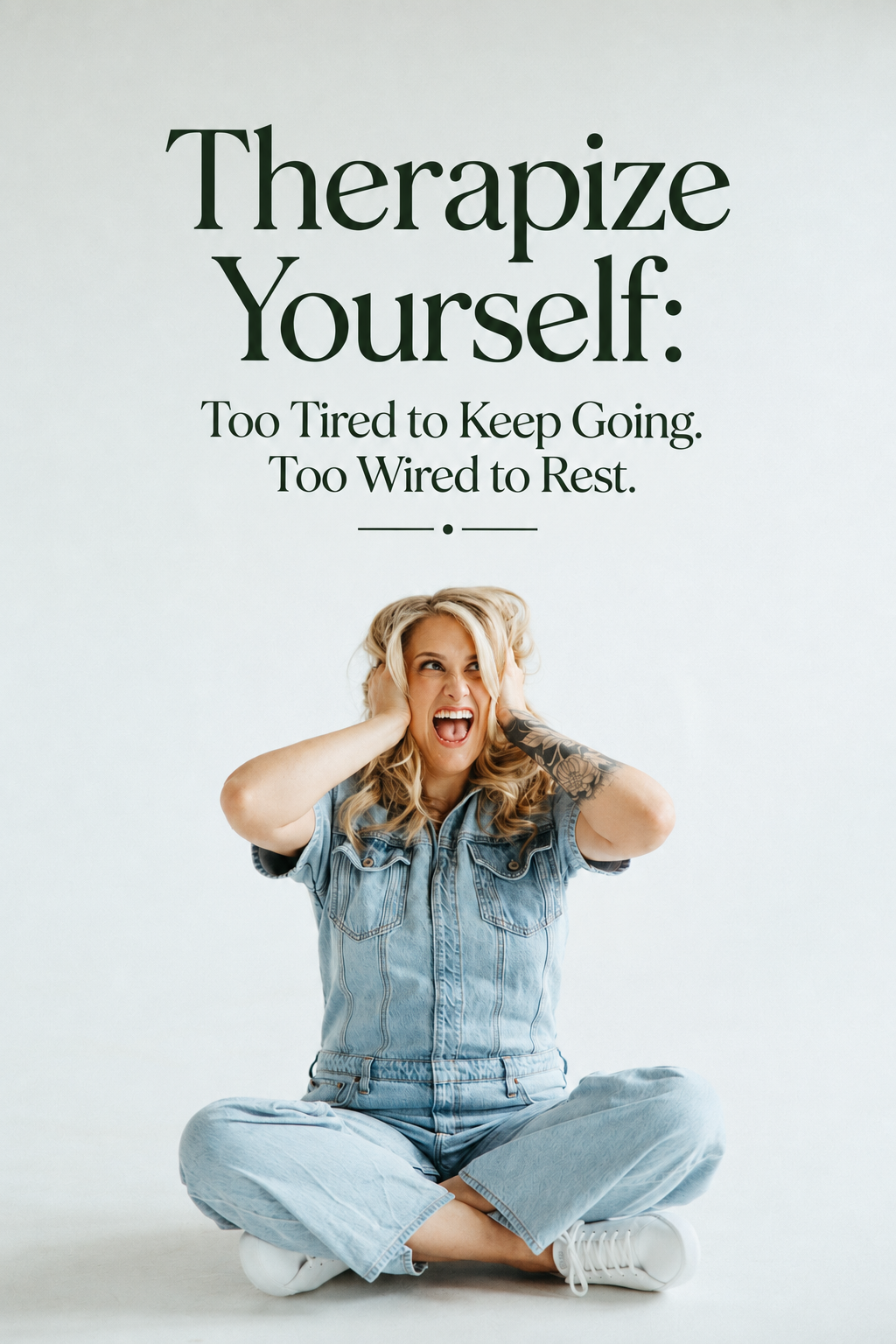
This is for the person who looks like she has everything together, but feels exhausted by how much it takes to keep it that way. You meet the deadlines, show up for everyone, and get things done. Then you finally have time for yourself, and you’re too drained to enjoy it but too wired to rest.
Too Tired to Keep Going. Too Wired to Rest. is a seven day guide created by trauma therapist Hannah Guy, LCSW, for when “just slow down” feels impossible. Through short somatic exercises, nervous system regulation tools, and reflection prompts, you’ll practice noticing stress sooner and making space for rest without turning self care into another performance.
You keep waiting for a quieter week. Your needs deserve attention this week. Get the guide and start today.
You’re exhausted.
But the second you slow down, your brain starts looking for a problem.
A seven-day guide for high-functioning women living with CPTSD who want a manageable place to start making room for rest.
You get through work. Answer the messages. Show up for everyone.
Then you finally sit down, and somehow you’re still on duty.
Replaying a conversation.
Wondering who’s upset with you.
Thinking about everything you should be doing instead.
This guide gives you short, therapist-created practices to explore what helps you feel more present, notice your limits, and respond to yourself with a little more care.
CPTSD doesn’t always look like falling apart.
Sometimes it looks like being the person who handles everything.
Maybe you’re the woman who:
Notices everyone else’s mood before she notices her own exhaustion.
Keeps busy because slowing down leaves more room for uncomfortable feelings.
Feels guilty resting when someone else might need something.
Replays a small mistake long after everyone else has moved on.
Wants connection but has nothing left when someone asks one more question.
Spends her free time scrolling, then criticizes herself for “wasting” it.
Looks like she’s managing while privately wondering how much longer she can keep this up.
You can be capable, dependable, and struggling.
Being able to push through doesn’t tell the whole story of what it costs you.

You finally sit down.
Your inner critic clocks in.
“You’re being lazy.”
“You should have handled that better.”
“What if you forgot something?”
If you learned to stay prepared, avoid mistakes, or keep other people happy to protect yourself, stepping back can feel uncomfortable.
You might understand exactly where that pressure comes from and still feel it every time you try to take a break.
Knowing why you do something doesn’t automatically make a different response feel available.
This guide gives you small opportunities to practice noticing what happens when you pause, without turning that pause into another thing you have to get right.
You cleared your schedule. You still feel on guard.
With CPTSD, you can stay alert to danger even when there isn’t an immediate threat.
That might look like watching for a shift in someone’s tone, bracing for something to go wrong, or struggling to settle after an upsetting interaction.
An empty calendar doesn’t necessarily quiet that alarm.
And sometimes, trying to relax brings your attention to feelings or sensations you usually stay busy enough to avoid.
You get to start with what feels manageable. A brief moment of noticing. Gentle movement. Something around you that helps you reconnect with the present.
You can adjust or stop. Forcing yourself through distress is not part of the assignment.


Imagine having energy left for the life you work so hard to hold together.
You finish work and have something left for the people you love.
You sit down to rest and know where to start when the guilt or restlessness shows up.
You notice yourself getting tense, overwhelmed, or pulled into your head before you’ve pushed past your limit.
And you have something to reach for.
A small practice.
A moment to check in.
A way to respond to what you need before you’re completely depleted.
The goal isn’t becoming someone who never feels the effects of CPTSD.
It’s building trust that you can notice what’s happening and take care of yourself when it does.
These seven days give you a place to start, so making room for yourself becomes something you practice instead of something you keep postponing.
This is for the person who looks like she has everything together, but feels exhausted by how much it takes to keep it that way. You meet the deadlines, show up for everyone, and get things done. Then you finally have time for yourself, and you’re too drained to enjoy it but too wired to rest.
Too Tired to Keep Going. Too Wired to Rest. is a seven day guide created by trauma therapist Hannah Guy, LCSW, for when “just slow down” feels impossible. Through short somatic exercises, nervous system regulation tools, and reflection prompts, you’ll practice noticing stress sooner and making space for rest without turning self care into another performance.
You keep waiting for a quieter week. Your needs deserve attention this week. Get the guide and start today.
Meet Therapize Yourself: Too Tired to Keep Going. Too Wired to Rest.
Inside this 17-page digital guide, you’ll find:
A plain-language explanation of your window of tolerance. Understand the difference between feeling on high alert, feeling shut down, and having room to think, feel, and choose your response.
Seven short guided practices. Explore sensory awareness, gentle movement, breathing, tapping, muscle relaxation, and a body scan.
Reflection prompts that make room for your actual experience. Notice what helps, what feels uncomfortable, and what you want to adjust.
A personal rest plan. Connect a manageable practice to something you already do.
Support for the messy parts. Including guilt about resting, missed days, feeling nothing, or finding that an exercise doesn’t suit you.
The daily practices take approximately one to seven minutes. You can shorten them, skip parts, and return to the ones that fit.
Created by a trauma therapist who lives with CPTSD and specializes in treating it.
I’m Hannah Guy, LCSW, an EMDR Certified trauma therapist and the owner of Revive Therapy Services.
I work with people who can explain their trauma, name their patterns, and understand why they react the way they do, yet still find themselves overwhelmed in everyday life.
I created this guide to make small, body-based practices easier to explore.
Each day gives you clear instructions and space to notice your response.
You get to learn what feels manageable for you, without making healing another performance review.

“I’ve tried coping skills. What if this becomes another thing I fail at?”
You don’t have to feel calm for a practice to count.
Noticing that an exercise doesn’t suit you is useful information.
Choosing something smaller is allowed.
Missing a day doesn’t erase the days you showed up.
If a practice increases your distress, stop. You can look around, reconnect with your surroundings, and seek support when you need it.
The point is to build familiarity with noticing, pausing, and choosing what supports you.
There’s nothing to ace.
You’re allowed to care for yourself before everything is handled.
Before everyone is happy.
Before the list is finished.
Before you’ve pushed yourself so far that rest becomes your only option.
Download Too Tired to Keep Going. Too Wired to Rest. and begin with one small practice.
This guide provides education and practical exercises. It does not diagnose or treat CPTSD, replace therapy or medical care, or create a therapist and client relationship. Individual experiences and results vary.
This is for the person who looks like she has everything together, but feels exhausted by how much it takes to keep it that way. You meet the deadlines, show up for everyone, and get things done. Then you finally have time for yourself, and you’re too drained to enjoy it but too wired to rest.
Too Tired to Keep Going. Too Wired to Rest. is a seven day guide created by trauma therapist Hannah Guy, LCSW, for when “just slow down” feels impossible. Through short somatic exercises, nervous system regulation tools, and reflection prompts, you’ll practice noticing stress sooner and making space for rest without turning self care into another performance.
You keep waiting for a quieter week. Your needs deserve attention this week. Get the guide and start today.