

Ketamine Therapy Can Feel Intimidating…But What If It’s Actually Liberating?
You Don’t Just Heal on Ketamine Therapy

You Finally Feel What You’ve Been Missing
If you’ve lived with chronic anxiety or depression long enough, it stops feeling like something you’re dealing with and starts feeling like who you are. The constant tension, the overthinking, the low-level dread in the background of your day… it becomes your normal. Even in moments that are supposed to feel good, your body doesn’t fully land there. There’s always something buzzing underneath.
A lot of people I work with say the same thing: “I can function, but I don’t actually feel good.”
And if you’ve tried therapy before and it didn’t work, it’s easy to start believing that maybe this is just how life is going to feel.
But that’s not actually the full story.
Trauma Doesn’t Just Live in Your Thoughts
One of the biggest reasons therapy doesn’t always work is because it focuses heavily on thinking. Changing thoughts. Challenging beliefs. Reframing patterns. And while that can be helpful, trauma isn’t just cognitive. It lives in your nervous system. It shows up in your body as tension, hypervigilance, emotional shutdown, or that constant sense of being on edge.
This is why approaches like EMDR, somatic experiencing, and ketamine-assisted psychotherapy (KAP) can create a completely different kind of shift. They don’t just help you understand your experiences. They help your system actually process them.
What Ketamine Therapy Does Differently
Ketamine works on the brain in a way that loosens the rigid patterns that keep people stuck. The same loops of anxiety, overthinking, and emotional numbness don’t feel as fixed. There’s more space. More flexibility. Less grip.
But what makes ketamine therapy so powerful isn’t just that it reduces symptoms.
It’s that it allows people to experience something they haven’t been able to access.
Calm. Openness. Relief. Sometimes even joy.
And for many people, that’s brand new.
A Client Story: “I Didn’t Know It Could Feel Like This”

I worked with a client who had lived with chronic anxiety and depression for most of her life. She had done years of therapy. She understood her patterns, could explain her trauma, and knew all the coping skills. But none of it changed how she actually felt day to day.
Her baseline was anxiety. Always. Even when things were objectively fine, her body didn’t feel safe.
After one of her ketamine-assisted psychotherapy sessions, she paused and said, “I don’t think I’ve ever felt this calm before. Not even once.”
Not calmer. Not a little better. Completely unfamiliar.
In another session, she described feeling something else that caught her off guard. “I felt happy. Not because anything happened. It was just there.”
That moment matters more than people realize. Because when you’ve never experienced true relief from anxiety, your system doesn’t even know it’s possible.
Why Experiencing Joy Is Part of Healing
Trauma doesn’t just create distress. It also limits access to positive emotions. Many people aren’t just anxious or depressed, they’re disconnected from feeling fully alive. Their system is so focused on survival that there’s no room for ease, play, or joy.
Ketamine therapy helps create a direct experience of something different. Instead of trying to think your way into feeling better, your brain and body get a real-time reference point for what calm or happiness actually feels like.
That experience becomes a foundation. Your nervous system starts to recognize, this exists too.
And from there, change becomes possible in a way that talk therapy alone often can’t reach.
This Is Where Integration Matters
The ketamine session is only one part of the process. What happens afterward is just as important. This is where we integrate the experience using approaches like EMDR and somatic experiencing to help solidify those shifts and continue processing underlying trauma.
Healing isn’t about one breakthrough moment. It’s about building capacity over time. Repeatedly returning to safety, openness, and connection until it becomes more familiar than survival mode.
You’re Not the Problem
If you’ve never felt relief, it’s easy to assume something is wrong with you. But more often than not, it’s not that you’re too anxious or too far gone. It’s that you haven’t had access to the kind of support that actually works with your nervous system.
There is a difference between managing symptoms and truly healing.
Ready to Feel Something Different

At Revive Therapy Services, we specialize in trauma-focused care using EMDR, somatic experiencing, and ketamine-assisted psychotherapy (KAP). We work with people who have tried therapy before and are still feeling stuck, especially those navigating trauma, anxiety, depression, and eating disorders.
We offer in-person therapy in Denver, Colorado and Philadelphia, PA, as well as virtual sessions across CO and PA.
If you’re curious about ketamine therapy and whether it could be a fit for you, you can reach out to schedule a consultation. Our Ketamine therapists—Salima and Hannah, are here to support you every step of the way.
You don’t have to stay in survival mode. There is more available to you than just getting through the day.
About Revive Therapy Services
Revive Therapy Services specializes in trauma therapy that helps you relearn how to feel and heal. If you’re ready to stop running from emotions and start feeling safe in them, we’d love to walk that journey with you. In Philadelphia, PA and Colorado we offer online and in person:
EMDR Therapy: Helps your brain reprocess stuck memories, core beliefs, and emotional patterns that live beneath the surface of your thoughts.
Somatic Experiencing: A body-based approach that helps you build tolerance for sensation and create safety within your nervous system, at a pace that respects your capacity.
IFS (Internal Family Systems Therapy): A compassionate, evidence-based approach that helps you explore and heal the different “parts” of yourself—like the inner critic, the people-pleaser, or the wounded child. Instead of trying to get rid of these parts, IFS helps you understand them, build inner harmony, and reconnect with your core Self—the calm, confident center within you that can lead the healing process.
Ketamine Assisted Therapy (KAP):A treatment that combines the medication ketamine with therapy to help people work through depression, anxiety, PTSD, or other mental health challenges. Ketamine can help your brain ‘reset’ some of the patterns that keep you stuck in negative thoughts or feelings, creating a window where it’s easier to process emotions and gain new insights. During sessions, you’ll have a guided experience with a trained therapist who helps you reflect, process, and integrate what comes up. The goal isn’t just the effects of the medication — it’s using that experience to support real, lasting changes in how you feel and cope.
Eating Disorder Treatment: Our Eating Disorder Treatment offers individualized, trauma-informed care designed to help you heal your relationship with food, your body, and yourself. Whether you’re navigating bingeing, restricting, emotional eating, or long-standing body image struggles, our team provides steady, compassionate support to help you understand the patterns underneath and build safety in your body. Together, we work toward lasting healing—one grounded in attunement, evidence-based tools, and a return to feeling whole.
Craving the raw, unfiltered side of therapy conversations?
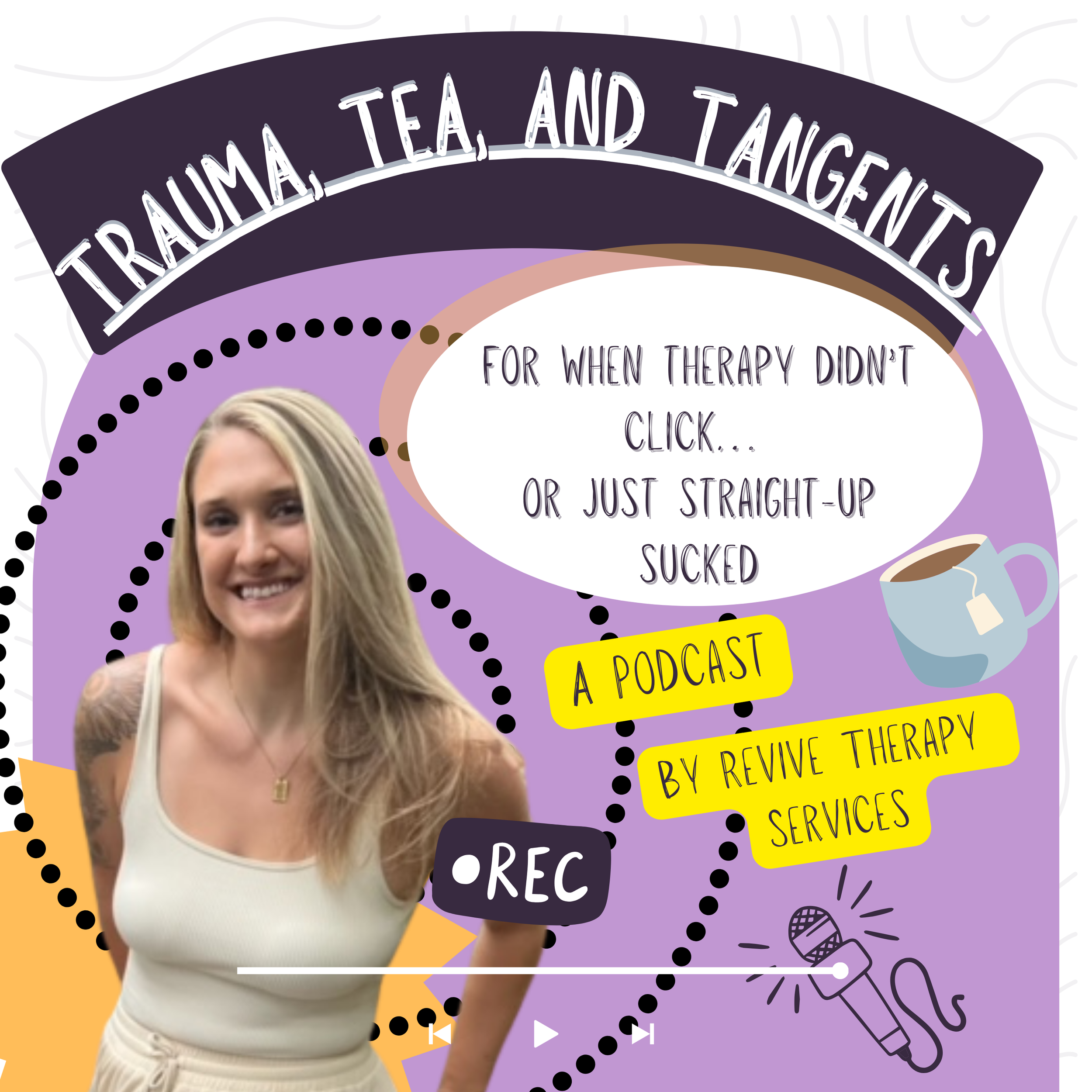
If today’s post resonated with you, I’d love to invite you to listen to my podcast Trauma, Tea, and Tangents! It’s a space for real talk about healing, resilience, trauma, and everything in between. Each episode blends trauma-informed perspectives with relatable conversations to remind you someone else is probably thinking what you are too! Available on all major platforms—just search for Trauma, Tea, and Tangents wherever you listen! Subscribe to my Substack for more authentic conversations about trauma, healing, and navigating life as a human. This is my unfiltered, behind-the-scenes content that you won’t find on here!
