
How to Set Boundaries With Family Without Feeling Like the “Bad Guy”
A Trauma-Informed Guide for the Holiday Season
For so many people, the holiday season brings up a complicated mix of emotions — excitement blended with dread, anticipation mixed with tension, joy layered over exhaustion. And for trauma survivors or anyone who grew up in emotionally unpredictable or high-pressure family environments, this time of year tends to spotlight one of the hardest relational skills of all: setting boundaries.
If the thought of telling a family member “I can’t make it this year,” or “I’m not comfortable talking about that,” immediately sends a wave of guilt through your body… you’re not alone. You’re not broken. And you’re definitely not the only one who feels like they’re doing something wrong by simply protecting their peace.
What most people don’t understand is that difficulty setting boundaries has very little to do with confidence or communication skills. It has everything to do with what your nervous system learned about safety when you were young.
Let’s talk about that — and why this time of year tends to flare it up.
Why Boundaries Feel Threatening When You Have a Trauma History

If you grew up in an environment where conflict wasn’t safe, where emotions were volatile, or where love felt conditional on appeasing others, your body learned early on that survival depended on being agreeable. It depended on avoiding disappointment. Being easy. Being “good.”
Maybe you were the child who learned not to speak up because it caused tension. Maybe you were the peacekeeper who absorbed everyone else’s feelings. Maybe you were the responsible one who carried burdens far beyond your years. Or maybe you were the child whose needs were minimized or dismissed altogether, so it felt easier not to have any.
When this is your starting point, saying “no” isn’t just a normal adult choice. It feels like a threat. Your brain might know you’re allowed to decline an invitation or set a limit, but your body reacts as if you’re breaking a sacred rule — a rule that used to keep you safe.
This is why even the smallest boundary can create an outsized emotional response. Your system isn’t reacting to the present moment. It’s reacting to the past, to the younger version of you who remembers what happened the last time you chose yourself.
That younger version of you learned something like:
“If I disappoint someone, chaos erupts.”
“If I speak up, they’ll get angry.”
“If I set a limit, I’ll be shamed.”
“If I have needs, I’m too much.”
So when you imagine setting a boundary with your family today, all those old associations get activated. It’s not that you don’t want to advocate for yourself — it’s that your nervous system doesn’t believe it’s safe.
This is why the holidays can feel like emotional quicksand. You’re pulled back into roles and dynamics that no longer fit who you are now.
Why the Holidays Make This Even Harder
There’s something about this season — the rituals, the expectations, the nostalgic cues — that naturally stirs up old emotional imprints. Even if your adult life is calmer or healthier now, your body still remembers the tone, rhythm, and emotional pressure of previous holidays.
The smells, the weather, the traditions, the family roles — they act like sensory triggers that transport your nervous system back to a time when your boundaries weren’t respected… or allowed.
So it makes perfect sense that your throat tightens when you try to advocate for yourself. It makes sense that you freeze up when someone pushes past your limits. It makes sense that you rehearse what you want to say 40 times but default to “it’s fine” when the moment comes.
Your body is doing what it learned to do: maintain connection at any cost.
But connection that requires you to abandon yourself is not connection. It’s compliance. And part of healing is learning to tell the difference.
A Gentle, Trauma-Informed Way to Set Boundaries

Setting boundaries doesn’t require a dramatic confrontation — and it definitely doesn’t require you to become someone you’re not. The truth is, boundaries can be incredibly soft. Grounded. Even warm.
The first step is pausing long enough to notice what your body is saying. Before you agree to anything, take a moment to check in: Does your chest feel tight or open? Does your breath feel shallow or steady? Do you sense a quiet yes, or do you feel yourself shrinking? Your body often tells the truth long before your mind rationalizes it away.
Once you know what you actually need, the next step is communicating it clearly — without apologizing for existing. And this part might feel deeply unfamiliar, because for years you may have survived by cushioning your choices with long explanations and “I’m sorry”s. But boundaries don’t require justification. You are allowed to simply say what is true for you.
It might sound like:
“I’m keeping things simple this year and won’t be traveling.”
Or:
“I can come, but only for a short time.”
Or:
“I’m not discussing that topic.”
Simple. Direct. Respectful.
And here’s the part no one warns you about: even when you express your needs calmly and kindly, you may feel an emotional wave afterward — guilt, tightness, nausea, overthinking, or the urge to take it all back. This does not mean you did something wrong. It means your nervous system is rewiring itself to understand that you can set a boundary and remain safe.
Healing isn’t the absence of activation — it’s learning to hold steady through it.
If Others Feel Disappointed, It Doesn’t Mean You’re Wrong
This is often the hardest piece for trauma survivors: tolerating someone else’s disappointment without internalizing it as failure. You may have spent years believing that your worthiness depended on keeping others comfortable. But the truth is, other people’s emotional reactions are not evidence that you made the wrong choice.
You can love your family and still set limits.
You can care about their feelings and still choose what’s right for you.
You can show up with kindness without sacrificing your wellbeing.
Your boundaries don’t make you selfish — they make you honest. They make you healthy. They make you someone who is slowly, steadily breaking generational patterns.
You Don’t Have to Do This Alone

If setting boundaries feels overwhelming, impossible, or terrifying, that is not a reflection of your strength or character. It is a reflection of what you lived through. And it is absolutely something you can heal.
At Revive Therapy Services, we work through these patterns using trauma-informed approaches like EMDR, Somatic Experiencing, and Ketamine-Assisted Psychotherapy — not by forcing behavior change, but by helping your nervous system feel safe enough to choose differently.
Our trauma-informed therapists, Salima, Rosa, and Hannah, are here to walk with you through every step of the way. We offer free consultations to see if our approach feels right for you.
If you want support navigating the holidays or rebuilding your relationship with boundaries, you can book a free consultation below.
You are not the bad guy for having limits.
You are a human who deserves to feel safe — even at home, even with family, even during the holidays.
About Revive Therapy Services
At Revive Therapy Services, we help adults heal from trauma, PTSD, Complex PTSD, childhood trauma, attachment wounds, anxiety, and chronic stress through evidence-based, trauma-informed care. We offer online therapy throughout Pennsylvania and Colorado, as well as in-person therapy in Philadelphia and Colorado. Our services include:
EMDR Therapy: Helps reprocess distressing memories, core beliefs, and emotional patterns that continue to affect you in the present.
IFS (Internal Family Systems Therapy): Helps you understand and heal the different parts of yourself with greater self-compassion and inner connection.
Ketamine-Assisted Psychotherapy (KAP): Combines ketamine treatment with therapy to support deeper emotional processing and new perspectives.
Eating Disorder Treatment: Provides individualized support for binge eating, restriction, emotional eating, body image struggles, and other concerns around food and your body.
If you’re ready to stop simply coping and start addressing the root of what’s keeping you stuck, schedule a consultation today. We’d love to help you find an approach to therapy that fits your needs.
Craving the raw, unfiltered side of therapy conversations?
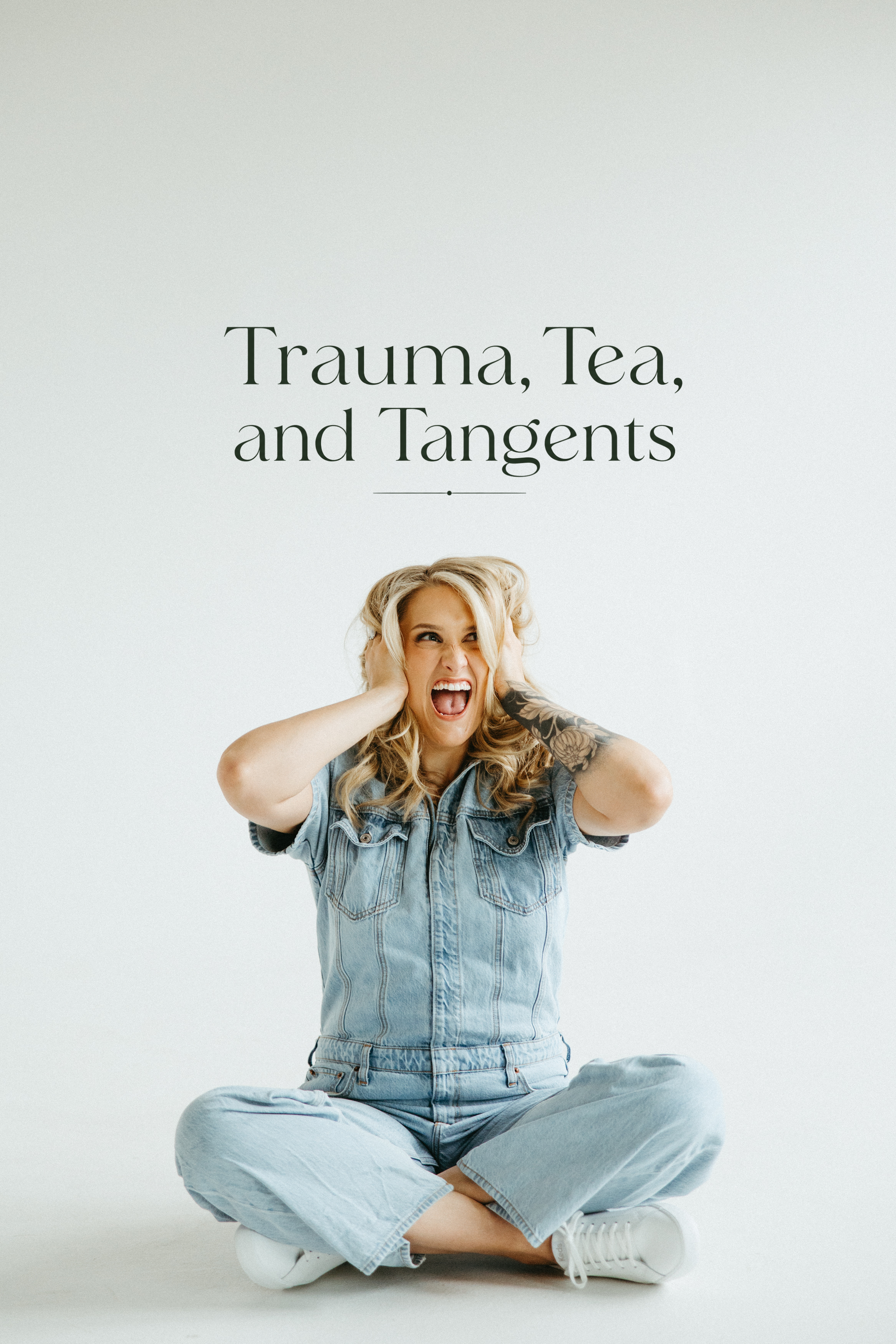
If today’s post resonated with you, I’d love to invite you to listen to my podcast Trauma, Tea, and Tangents! It’s a space for real talk about healing, resilience, trauma, and everything in between. Each episode blends trauma-informed perspectives with relatable conversations to remind you someone else is probably thinking what you are too! Available on all major platforms—just search for Trauma, Tea, and Tangents wherever you listen! Subscribe to my Substack for more authentic conversations about trauma, healing, and navigating life as a human. This is my unfiltered, behind-the-scenes content that you won’t find on here!
